
Energy Efficient Door Upgrades: A 2026 Guide
Table of Contents
Why Energy Efficient Door Upgrades Matter for Your Home
Understanding Door U-Value Explained
Composite vs uPVC Doors Energy Efficiency
Composite Door Strengths and Thermal Performance
uPVC Door Advantages and Insulation Properties
How to Draught Proof External Doors
Double and Triple Glazing for Thermal Efficiency
Retrofitting vs Full Replacement: Which Suits Your Home
Maintenance and Long-Term Durability
Frequently Asked Questions
Last Updated: October 2, 2026
Why Energy Efficient Door Upgrades Matter for Your Home
Energy efficient door upgrades are no longer a luxury, they're a practical investment that directly affects your comfort, energy bills, and home value. Heat loss through poorly insulated doors accounts for a significant portion of wasted energy in many homes, particularly in older properties where draught seals have deteriorated and glazing lacks proper insulation properties.
The real problem isn't that doors are inherently inefficient. It's that most homeowners don't realise how much thermal performance varies between options. A standard single-glazed door with basic seals might lose heat constantly, while a modern composite door with triple glazing and airtight seals performs dramatically differently. The difference compounds over months and years.
Homeowners often try temporary fixes, weatherstripping, draught excluders, and heavy curtains before addressing the root cause: the door itself. These band-aids help, but they don't solve the underlying thermal efficiency problem. When you're dealing with condensation, cold spots near the door frame, or energy bills that never seem to drop, an energy efficient door upgrade tackles the issue directly.
What makes this upgrade particularly valuable right now is the range of solutions available. Whether you're retrofitting an older property or replacing doors entirely, material choices like composite, uPVC, and aluminium offer different thermal performance levels, costs, and aesthetic outcomes. Understanding these options helps you make a decision that actually fits your home and budget.
Understanding Door U-Value Explained
U-value measures how much heat passes through a door. The lower the U-value, the better the insulation. A door with a U-value of 1.0 W/m²K loses less heat than one rated at 2.5 W/m²K, and that difference directly affects your heating costs.
U-values matter because they're standardised, comparable, and directly linked to energy performance. When comparing energy efficient door upgrades, U-value is one of the first specifications to check. Current building regulations favour doors with U-values below 1.4 W/m²K for new installations, though older doors often sit well above 2.0.
The thermal transmittance rating tells you exactly what you're getting. A composite door with triple glazing and a foam-filled core typically achieves U-values between 0.8 and 1.2 W/m²K. uPVC doors with double glazing usually fall between 1.2 and 1.5 W/m²K. Aluminium doors, which conduct heat more readily, typically range from 1.5 to 2.5 W/m²K unless they include thermal breaks.
What most guides miss is that U-value alone doesn't tell the full story. Installation quality matters enormously. A door with an excellent U-value installed poorly, with gaps around the frame, insufficient insulation in the reveal, or misaligned seals, performs far worse than the specification suggests. This is why proper fitting is as important as the door itself.
Composite vs uPVC Doors Energy Efficiency
Composite and uPVC doors dominate the energy efficient door upgrades market because they deliver strong thermal performance at different price points and aesthetic preferences.
Composite Door Strengths and Thermal Performance
Composite doors combine a uPVC or aluminium frame with a solid timber or foam core, wrapped in a composite skin. This construction delivers excellent thermal efficiency because the foam core provides continuous insulation across the entire door face.
Thermal performance is where composite doors excel. A quality composite door with triple glazing and a high-density foam core achieves U-values as low as 0.8 W/m²K, among the best available. The solid core eliminates thermal bridging that occurs in hollow-core doors, meaning heat loss is minimised across the entire panel.
Durability compounds the energy efficiency benefit. Composite doors resist weathering, don't warp or expand like timber, and maintain their seals and insulation properties for decades. A door that stays airtight and structurally sound keeps performing well year after year, which means sustained energy savings over the door's lifespan.
The trade-off is cost. Composite doors typically cost more upfront than uPVC alternatives. However, when you factor in durability, maintenance costs, and long-term energy savings, the total cost of ownership often favours composite for homeowners planning to stay in their property long-term.
uPVC Door Advantages and Insulation Properties
uPVC doors offer a more affordable entry point into energy efficient door upgrades without sacrificing meaningful thermal performance. Modern uPVC doors with double or triple glazing achieve U-values between 1.2 and 1.5 W/m²K, solid performance for most applications. Maintaining this level of thermal consistency across the entire building envelope often requires pairing these doors with energy efficient windows that mitigate solar heat gain in warmer regions.
The insulation properties depend heavily on the door construction. Hollow-core uPVC doors perform poorly thermally. Foam-filled uPVC doors perform significantly better. Triple glazing instead of double glazing improves U-value by roughly 0.2-0.3 W/m²K. These choices matter.
uPVC doors are lower maintenance than timber and more affordable than composite. They don't require painting or staining, resist rot and weathering, and are straightforward to repair if seals fail. For budget-conscious homeowners or rental properties, uPVC delivers respectable energy efficiency without premium costs.
The limitation is long-term performance. uPVC can become brittle and discolour over 20-30 years. Seals degrade. The door may still function, but thermal performance drifts downward. This is why uPVC doors suit homeowners who plan to upgrade again within 15-20 years or who prioritise lower initial cost over extended durability.

How to Draught Proof External Doors
Draught-proofing is the quickest way to improve an existing door's thermal performance without replacing it. Even a new door loses efficiency if air leaks around the frame.
Start by identifying where draught enters. Run your hand around the door frame on a cold day, you'll feel air movement at problem areas. Common culprits are the bottom gap under the door, gaps between the frame and wall, and worn seals around the door edge. Cold spots and condensation near the frame indicate air infiltration.
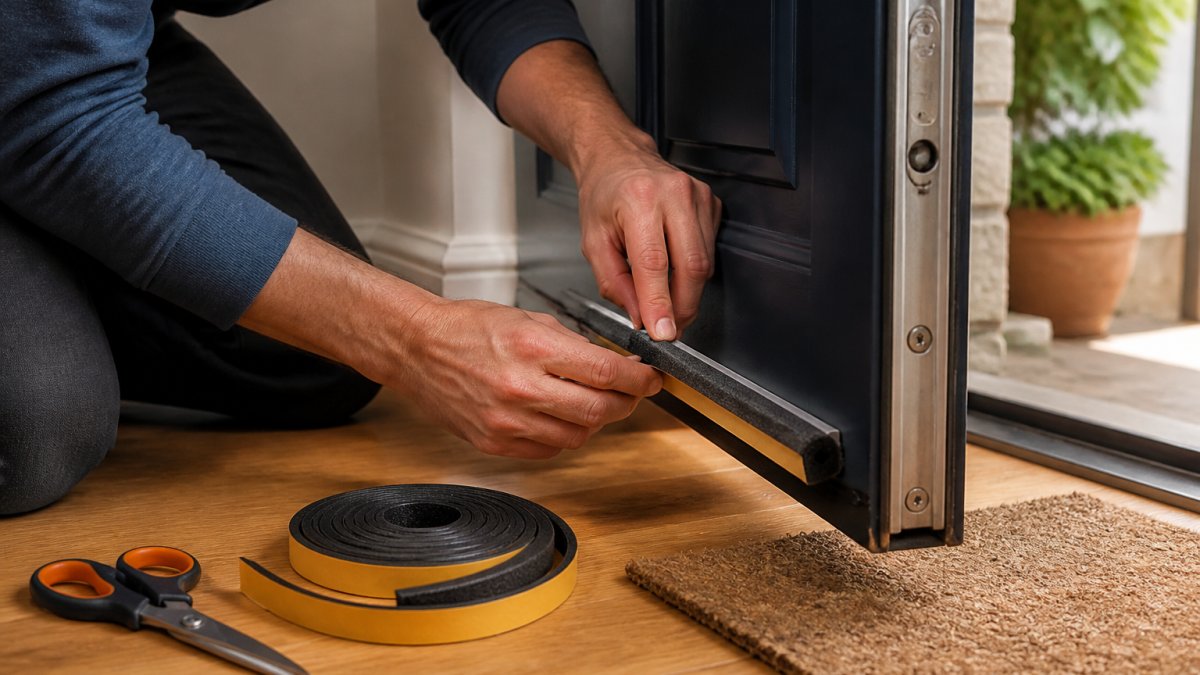
Weather stripping is the first practical step. Self-adhesive foam strips or rubber seals applied around the door edge create an airtight seal when the door closes. These cost little, install easily, and noticeably reduce draught. Apply them to the top and both sides of the frame, ensuring the door closes firmly without binding.
The bottom gap requires a draught excluder or threshold seal. A brush-type draught excluder mounted on the door itself sweeps across the floor when closed. A threshold seal or door sweep fitted to the frame edge seals the gap permanently. Both work; choose based on your door style and whether you want a permanent or removable solution.
For gaps between the frame and wall, expanding foam sealant fills the void. After installation, trim excess foam and cover with moulding or caulk. This prevents air leakage and improves thermal performance around the entire frame perimeter.
In practice, draught-proofing an external door typically takes 1-2 hours. Results are immediate, you'll feel less draught and notice fewer cold spots. For older doors or temporary solutions, this delivers genuine value before committing to full replacement.
Double and Triple Glazing for Thermal Efficiency
Glazing is where much of a door's thermal performance is determined. The difference between single, double, and triple glazing is substantial and measurable.
Single glazing, common in older doors, offers minimal insulation. Heat passes through glass readily. Double glazing, which became standard decades ago, traps a layer of air between two glass panes, creating insulation. The air gap (typically 6-16mm) is the key. This trapped air resists heat transfer far better than glass alone.
Triple glazing adds a third pane and second air gap, doubling down on insulation. A door with triple glazing and low-emissivity coatings on the glass surfaces achieves substantially lower U-values than double glazing. The improvement ranges from 0.2 to 0.4 W/m²K depending on the specific units.
The trade-off is weight and cost. Triple-glazed units weigh more, requiring stronger frames and hinges. Manufacturing costs are higher. For most homeowners, triple glazing makes sense in very cold climates or if you're already investing in a high-performance composite door. For standard uPVC replacements in moderate climates, double glazing delivers excellent returns.
Gas fills between panes further improve performance. Argon gas, denser than air, reduces heat transfer more effectively (pubmed.ncbi.nlm.nih.gov). Some premium doors use krypton or xenon.
Retrofitting vs Full Replacement: Which Suits Your Home
The choice between retrofitting existing doors and full replacement depends on the door's current condition, your timeline, and budget constraints.
Maintenance and Long-Term Durability
How well an energy efficient door upgrade performs over time depends on maintenance and material durability. A door installed perfectly but neglected deteriorates faster than one receiving regular care.
Factor | Composite Doors | uPVC Doors | Timber Doors |
U-Value Range | 0.8-1.2 W/m²K | 1.2-1.5 W/m²K | 1.5-2.2 W/m²K |
Maintenance | Minimal | Minimal | Extensive |
Expected Lifespan | 25-30 years | 15-20 years | 20-40 years |
Upfront Cost | Higher | Moderate | Variable |
Thermal Durability | Excellent | Good | Excellent |
Frequently Asked Questions
What is a good U-value for energy efficient doors?
A U-value measures thermal transmittance, how much heat escapes through the door. Lower U-values indicate better insulation. For energy efficient doors, aim for a U-value of 1.4 W/m²K or lower. Modern composite and triple-glazed doors typically achieve 0.9-1.2 W/m²K, significantly reducing heat loss compared to older doors with U-values of 3-4 W/m²K. Check the product specification before purchase to confirm thermal performance.
Are composite doors more energy efficient than uPVC?
Composite doors generally offer superior thermal efficiency due to their solid timber core and insulating foam layer, typically achieving U-values of 0.9-1.1 W/m²K. uPVC doors with multi-chamber profiles and double glazing usually reach 1.2-1.4 W/m²K. The difference is modest but noticeable over time. Composite doors also resist warping and require less maintenance, making them ideal for long-term energy conservation, though they cost more upfront.
How much can replacing my door reduce energy bills?
Energy savings depend on your current door's condition, home insulation, and local climate. Upgrading from a draughty single-glazed door to an energy efficient model can reduce heat loss, potentially lowering heating costs. Results are most dramatic in older properties with poor insulation. Combined with draught-proofing and window upgrades, the cumulative savings are substantially higher. Exact figures depend on your specific situation, contact Dri-House for a personalised assessment.
Is triple glazing worth it for external doors?
Triple glazing offers marginal improvements over double glazing, typically reducing U-values by 0.1-0.2 W/m²K. The extra cost may not justify the modest thermal gain unless your home is in a very cold climate or you prioritise maximum insulation. Double glazing with high-performance frames delivers excellent results at better value. Triple glazing is more worthwhile for windows than doors. Assess your overall insulation strategy before deciding.
Book Free Call

Comments